From Grassroots to Platform
How NPHS is Rewiring Itself
By Greg O’Donnell, Chief Impact Officer
A quiet rewiring has been underway at NPHS for some time now, and it does not look like what most people expect. It does not hinge on a single breakthrough moment. Instead, it reflects a deliberate rethinking of how impact is created, structured, and sustained.
At NPHS, this evolution has been intentional and years in the making. It reflects a growing recognition that while the traditional nonprofit model has been essential for addressing immediate needs, it is not structurally equipped to meet the scale and complexity of the challenges facing underserved communities across the Inland Empire and beyond.
Yet even as NPHS evolves, one thing has not changed: it remains deeply place-based, rooted in the communities it serves and grounded in the relationships that defined its earliest days.
What NPHS is building is not a departure from its origins. It is an expansion of those origins, grounded in platform-based impact.
The Limits and Strengths of the Grassroots Model
NPHS began in 1986 as a grassroots coalition responding to a clear and urgent need: expanding access to housing resources in communities that had long been excluded from wealth-building opportunities. By 1991, that grassroots effort had evolved into an incorporated nonprofit focused on housing counseling and homeownership access in the Montclair area.
For many years, this model delivered meaningful results. Families received one-on-one guidance, accessed down payment assistance, and navigated systems that had long excluded them. Trust was built where it had long been absent.
That trust remains among NPHS’s greatest assets.
But the model itself has inherent constraints. At its core, it is a labor-intensive, grant-dependent, linear service delivery system. You help one family, then another. You grow by hiring more staff and securing more funding. Your impact is real, but it scales only as fast as your headcount and your funders allow. In a region where more than 4 million residents across San Bernardino, Riverside, Eastern Los Angeles, and Imperial Counties face compounding issues in housing, wealth, and climate resilience, linear growth is simply not enough.
“We needed a different organizational architecture, but it would have to be built without abandoning the very community-centered values that made the organization effective in the first place,” said NPHS President and CEO Clemente Arturo Mojica.
From Programs to Platforms Rooted in Community
“The shift began when we started asking a different question,” said Clemente. “Instead of asking, ‘What programs can we deliver?’ we began asking, ‘What ecosystem can we build?’”
That question reframed everything.
Traditional service models operate like a pipeline, with inputs producing outputs in a linear sequence. Platform-based models, by contrast, generate impact by enabling interactions among a network of participants: residents, lenders, developers, contractors, policymakers, and capital providers.
But at NPHS, this is not a purely technical shift; it is a philosophical one.
“This transformation is deeply community-centric,” Clemente adds. “We are building a platform to scale impact, but we are not losing our soul in the process. Our roots are in the community, and that will always define how we grow.”
Platform-based impact, in this context, is not about replacing relationships but about strengthening and scaling them.
The Architecture of a Place-Based Platform
NPHS has become an integrated ecosystem of social enterprises and community development vehicles, each with a distinct role and rooted in the communities where NPHS has long-standing trust and presence.
- Sojourner Solar expands access to clean energy in communities historically excluded from the solar market, turning energy burdens into savings and resilience.
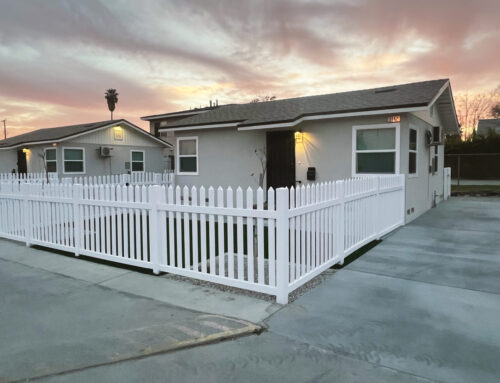
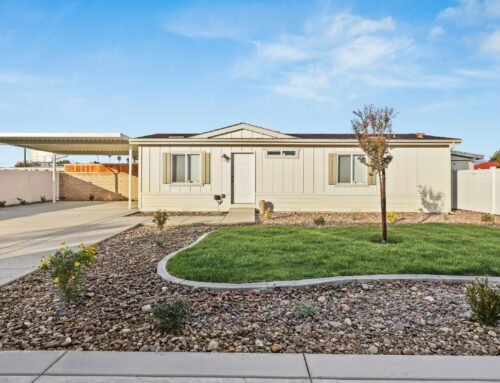
- Homes by NPHS advances factory-built and infill housing strategies that directly address local land constraints and affordability challenges.
- Homes & Hope represents a defining expression of platform-based impact. As a mission-driven, for-profit affordable housing developer co-owned with partners including The McCarthy Companies, it integrates development, construction, and financing into a coordinated system designed to produce housing at scale while remaining grounded in local community needs and realities.
- The NPHS Community Investment Trust (CDFI) serves as the platform’s financial backbone, deploying capital in neighborhoods that traditional financial systems have overlooked—from mortgage lending and ADU financing through ADUgo to wildfire resilience financing programs that address the region’s growing climate risks.
- Policy and Community-Owned Futures as a Platform reflects NPHS’s evolving approach to systems change, grounded in the belief that communities should not only inform policy but also help own and shape their futures. Rather than treating advocacy as a standalone function, NPHS is rethinking how advocacy translates into policy through a platform-based model that integrates data, lived experience, capital deployment, and on-the-ground implementation. The goal is not only to influence more responsive and scalable public policy but also to build pathways for community ownership, voice, and long-term agency within the systems that govern their lives.
Each component is designed not in isolation, but in relationship to one another and to the communities they serve.
Platform-Based Impact in Practice: Scaling Relationships, Not Replacing Them
When a family engages with NPHS, they are not entering a disconnected system of programs. They are entering a platform built around their needs.
A first-time homebuyer may begin with counseling, access down payment assistance through the CDFI, finance energy improvements, explore building an ADU, and remain connected to a broader ecosystem of opportunity over time.
What makes this model distinct is that it does not sacrifice proximity for scale.
Instead, it uses platform-based design to scale trusted relationships, extending the reach of community-based work without losing the human connection that makes it effective.
This creates what can be understood as a platform dividend:
- Network effects that deepen engagement
- Cost efficiencies through shared infrastructure
- Diversified revenue streams that sustain long-term impact
- Compounding outcomes across households and neighborhoods
Responsible Scalability: Holding Onto What Matters Most
In this model, growth is not measured solely by size. It is measured by integrity.
Responsible scalability means ensuring that as NPHS expands its platform, it remains accountable to the communities that shaped it. It means designing systems that do not abstract people from their lived realities but instead respond more effectively to them.
It also means holding firm to a core principle: that innovation in community development must enhance our communities, not dilute it.
What This Means for the Future of NPHS
The challenges facing low-income communities in the Inland Empire are not shrinking. The housing affordability crisis deepens. The climate threat intensifies. Wealth gaps persist. And the federal and philanthropic resources available to address these challenges are under pressure from every direction.
Meeting this moment requires more than incremental change. It requires a new architecture that combines the trust and proximity of a grassroots organization with the scalability, efficiency, and interconnectedness of a platform.
NPHS is not finished building that architecture.
“We’re still very much in the middle of the rewiring,” said Clemente Mojica. “But the foundation is in place, the ecosystem is growing, and the communities we serve are experiencing what responsible scalability actually looks like, which is more services, deeper impact, and a platform built not for the organization’s convenience, but for the elevation of the people it was created to serve.”
That has always been the mission. The platform is simply a better way to fulfill it.
When asked what keeps him up at night as NPHS advances its platform-based impact approach, Clemente reflects, “I’m not even sure what innovation means anymore, but everyone is chasing it. For us, no matter what new platform or model we pursue, it must stay rooted in its mission. That’s how we make sure we don’t lose our soul in the process.”